
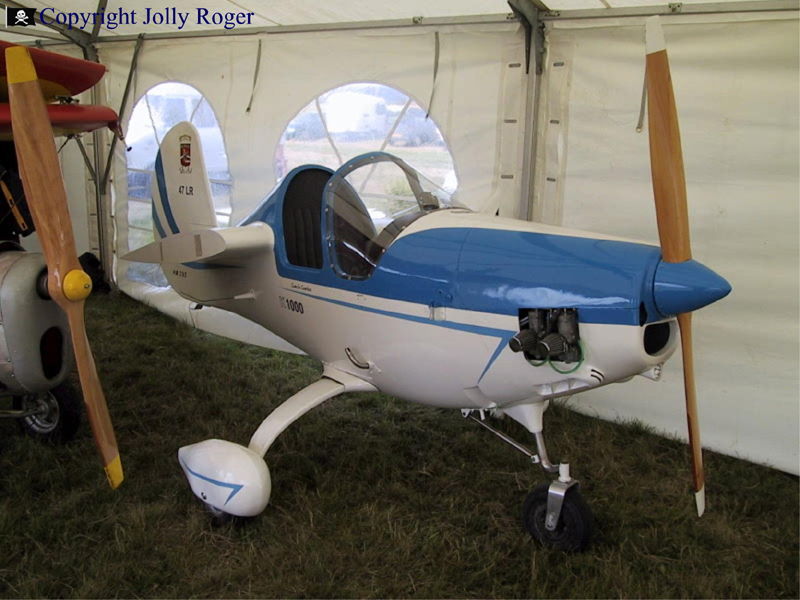
HM 293 / composite fuselage / Camille Camus + Noël Bastiaen
This fuselage is amazing! Those curved lines are just beautiful! Complete composite body. Not sure how heavy it was in comparison to a normal HM293 body. If you have more info about this project, please tell me, so i can share it here.
Picture from Jolly Roger website (Jerome Falc)
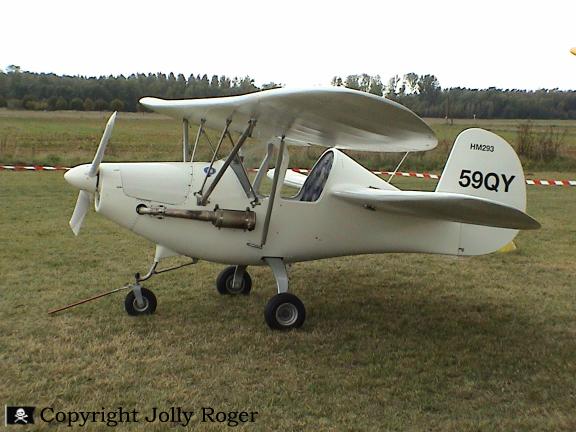

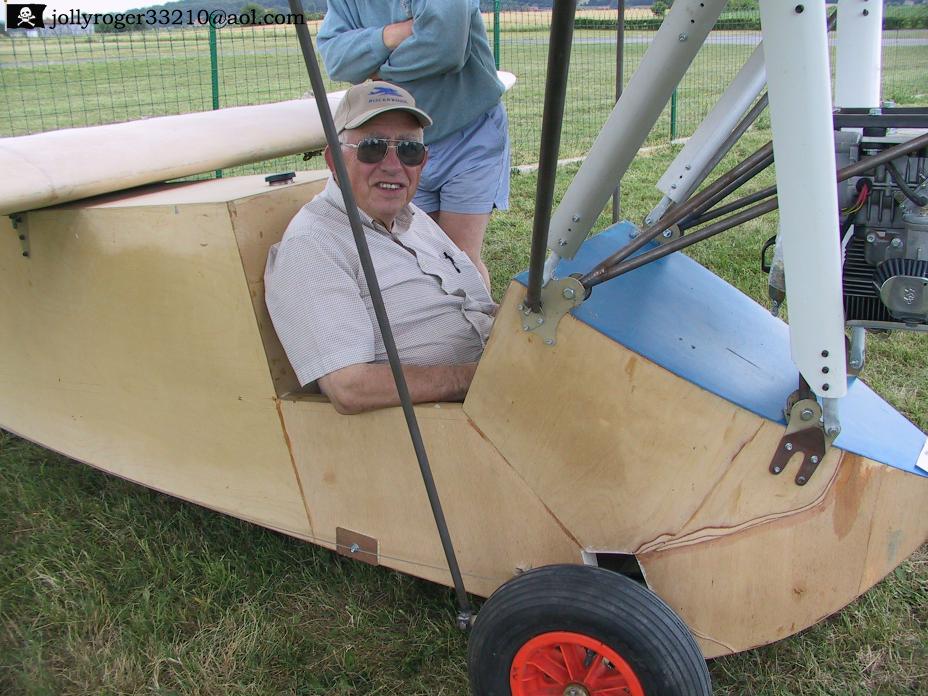
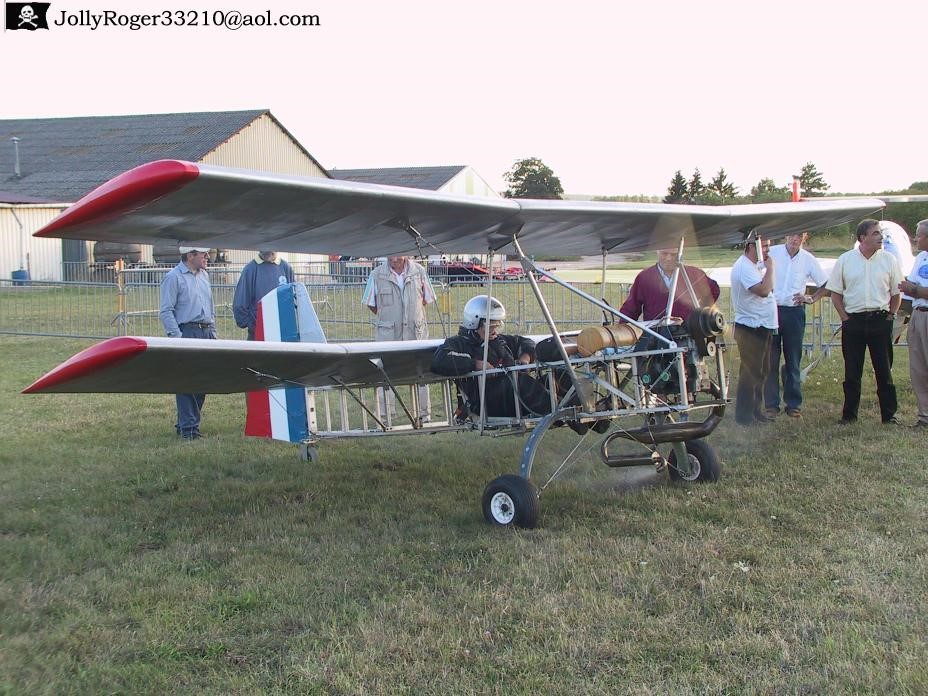
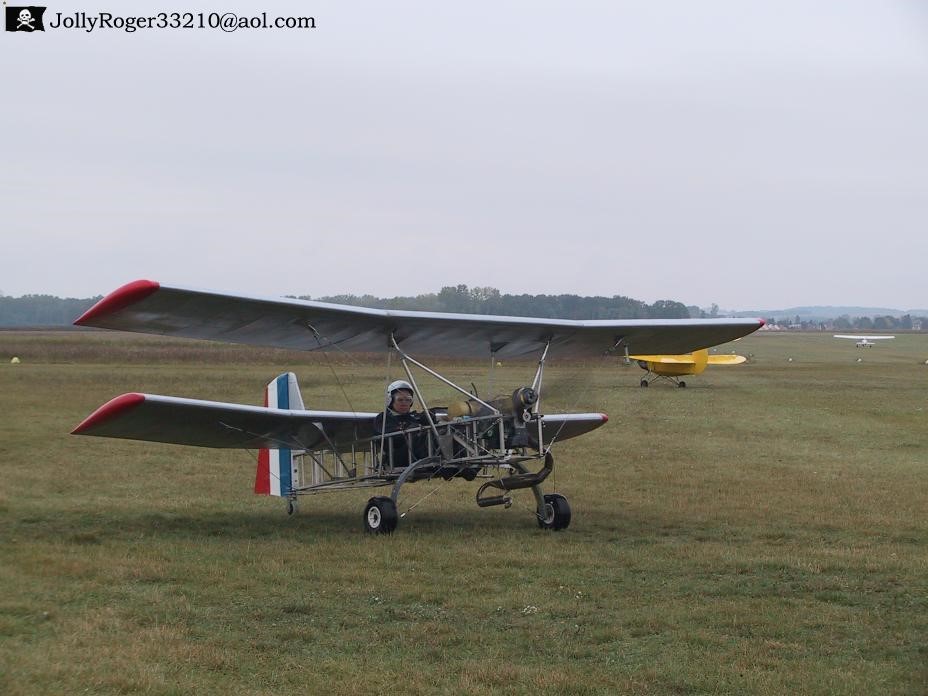
HM14 / HM14 with wings of HM360 and wider body / Jerome Falc
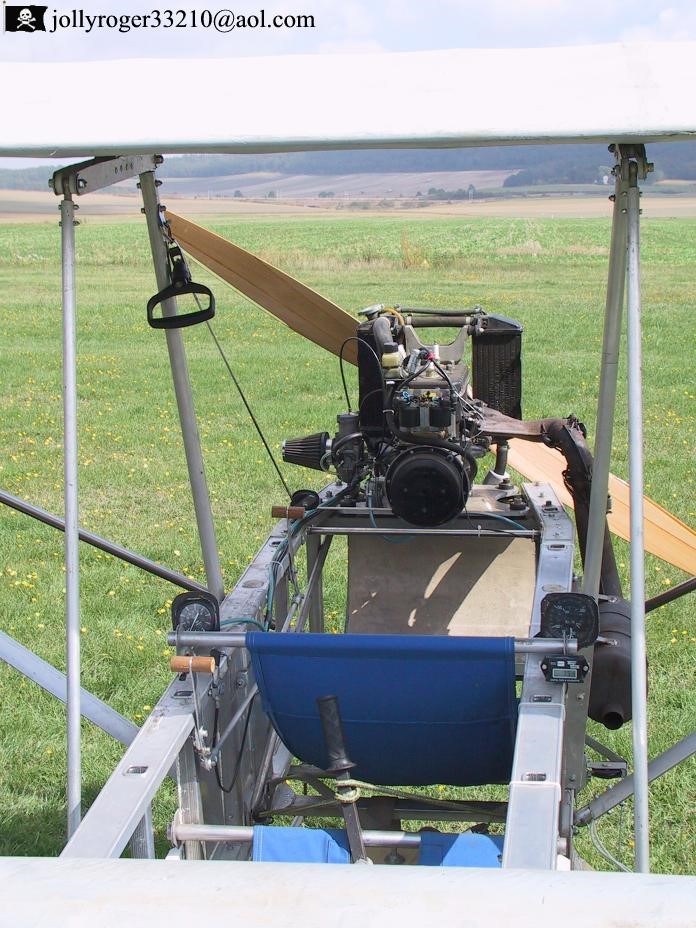
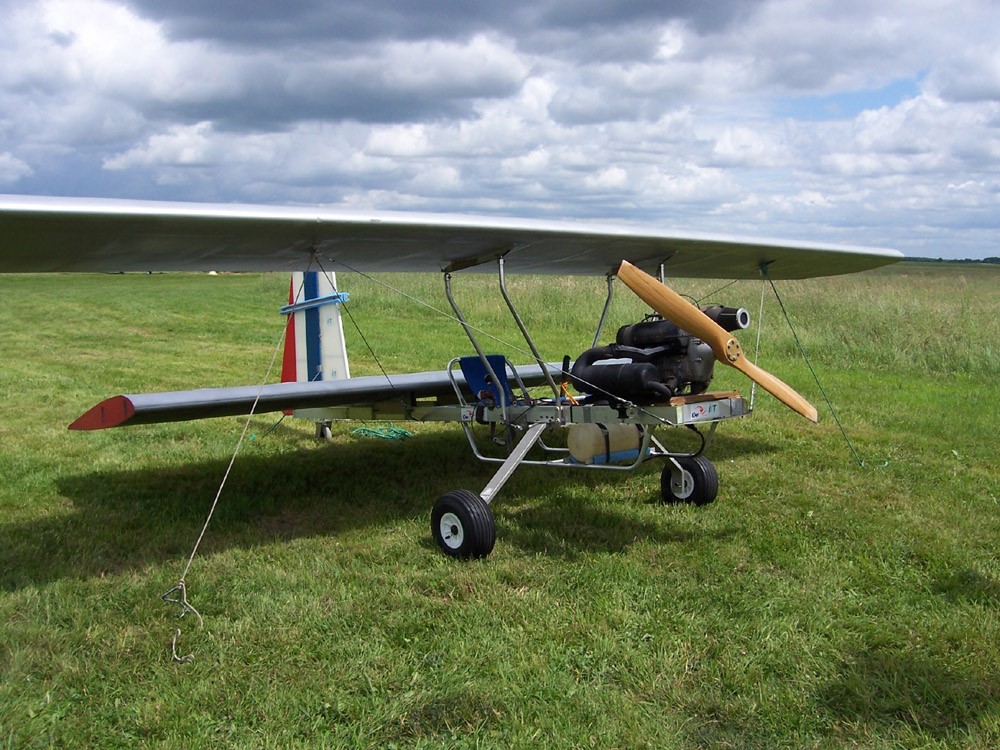
This one looks like a normal HM14, but it isn't. It is a HM14/360. It has the wings of a HM360. Because of the difference in chord Jerome had to make a longer fuselage. And he was wise enough to also use the wider cockpit. The plans for the wider cockpit are mentioned in the section THINGS TO REMEMBER. You can also see that he made the same choice as Bernard Domont by placing the fuel tank behind the pilot. You can also see he used airfoil shaped tubes for the wing support.
The guy in the picture is not Jerome Falc. It is the beloved Paul Pontois, the guy from Canada who translated a lot for the English spoken builders.
Picture from Jolly Roger website (Jerome Falc)

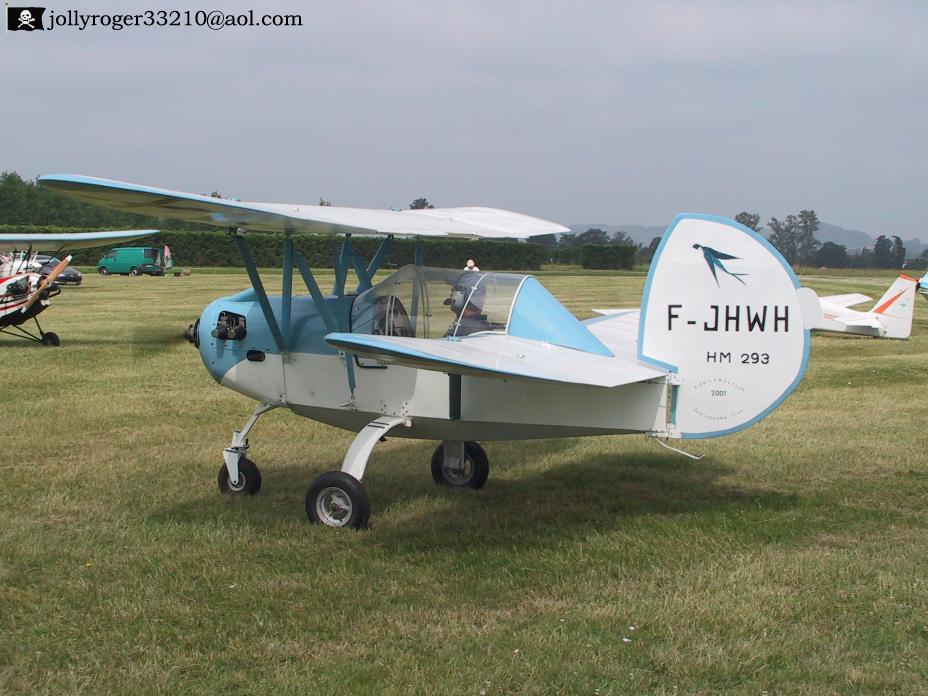
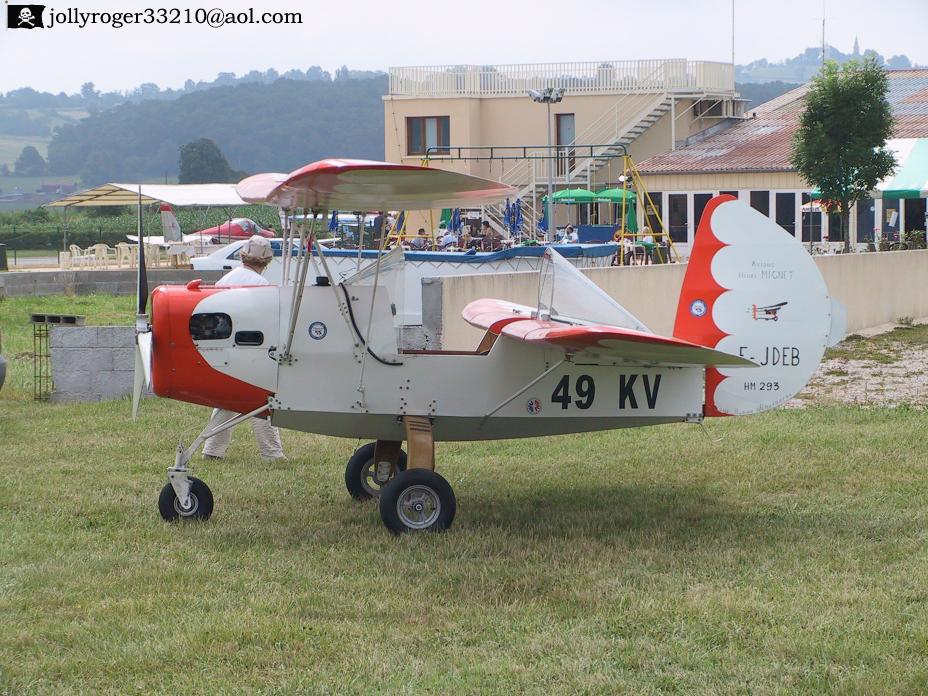
HM293 / different canopy / Brothers Vinsonneau (France)
These brothers choose to make their canopies larger. It gives the airplane a different look. I do think it is not a rotating canopy, but a dismountable canopy. Picture from Jolly Roger website (Jerome Falc)
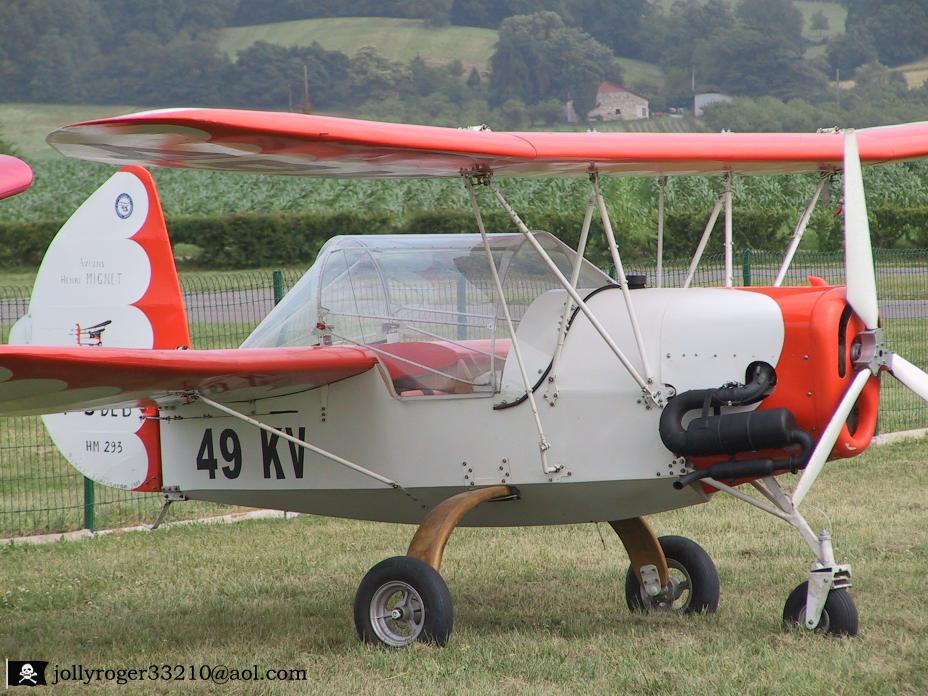
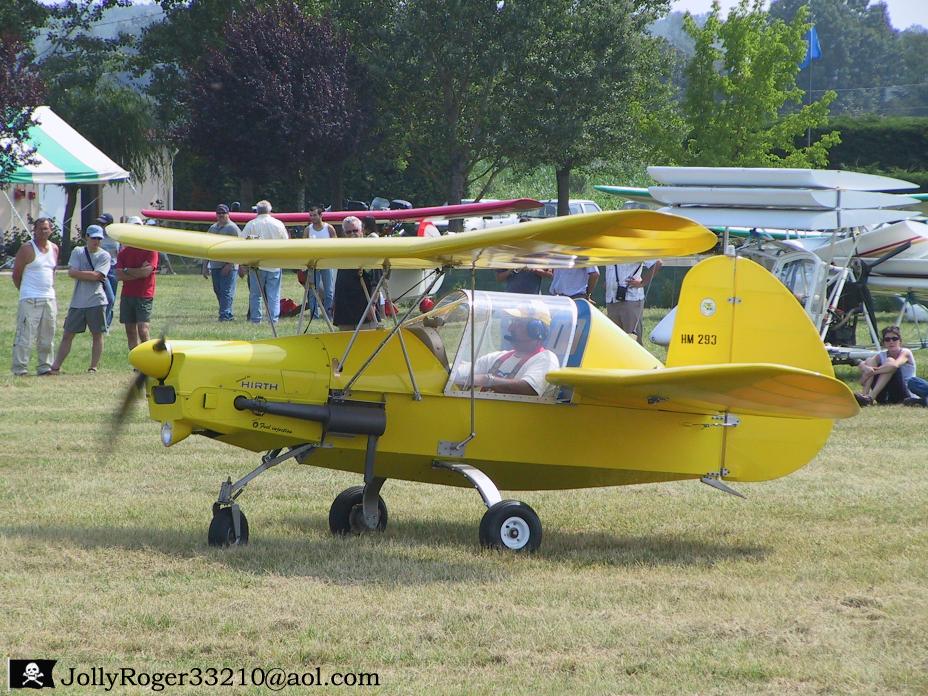
HM293 / Engine decides what nose it will be / Didier Quintard (France)
This HM293 is having a Hirth engine. I guess it is a lighter engine than what we usually see on a HM293. So Didier had to place the engine more forwards to keep the CG right. Hence its long nose look. Picture from Jolly Roger website (Jerome Falc)
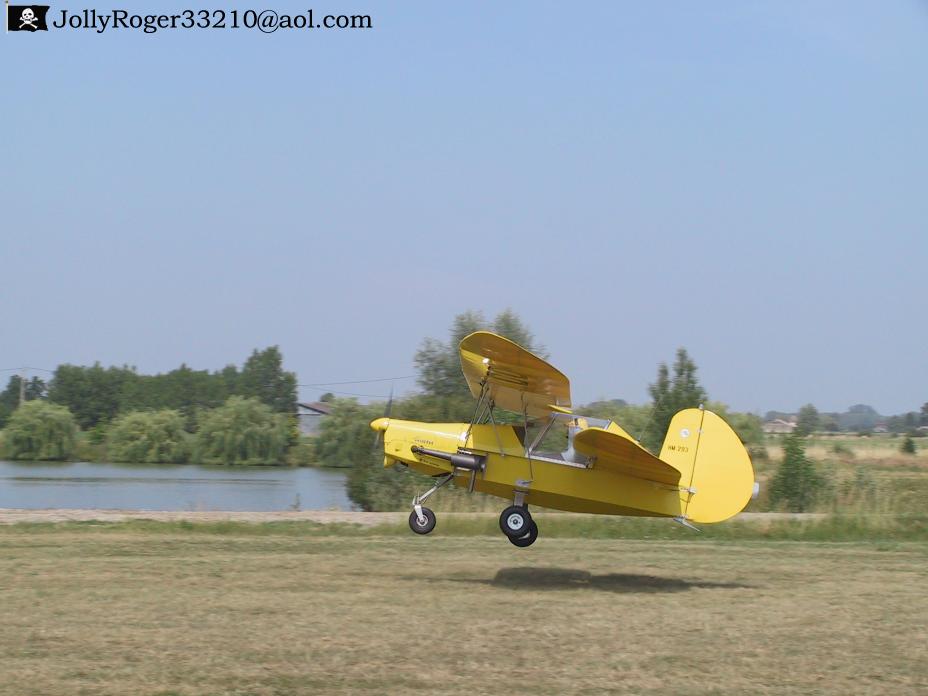

HM293 / More rectangular body/ Joël Braxéres
If you make some changes to the fuselage, it gets ... a different look. Watch out ... it is not always prettier. Might have more space, be easier to make, but it has less looks. Sorry, my personal opinion. Personally i would have kept the angled underside of the HM293.
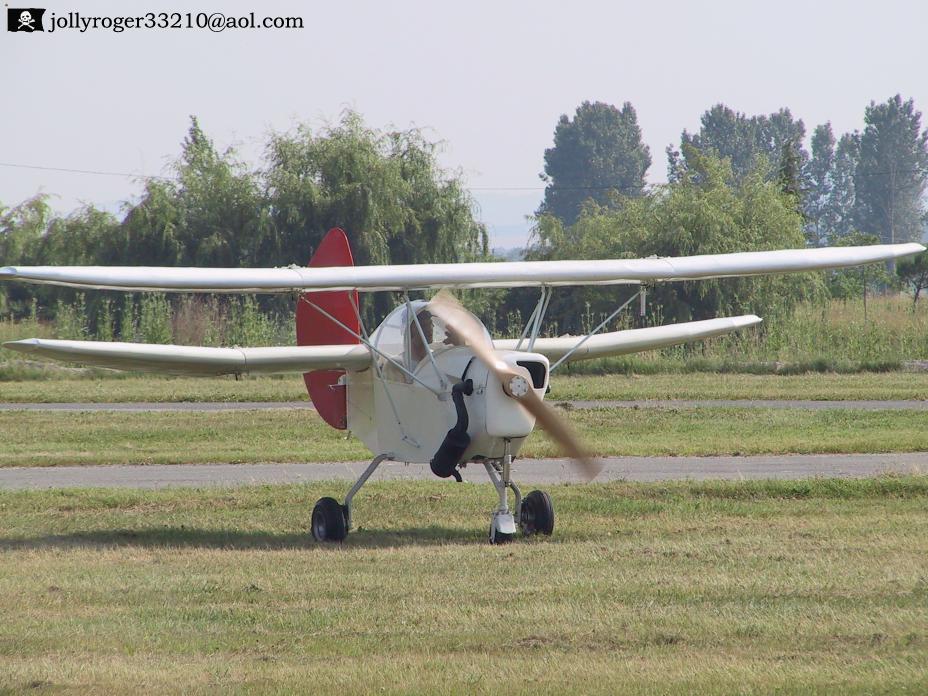
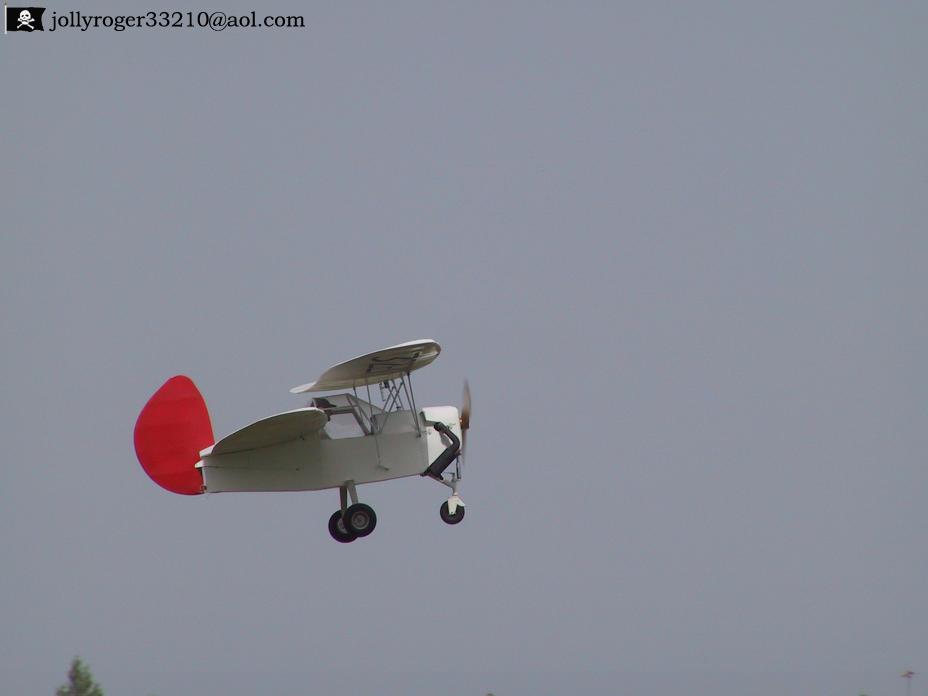
HM293 / simplifying everything / Alain Jego
No words needed
Alain is a very creative guy when it comes to seeing the most basic solution for a problem. He once made a prop-copy-machine that way. I was super impressed.
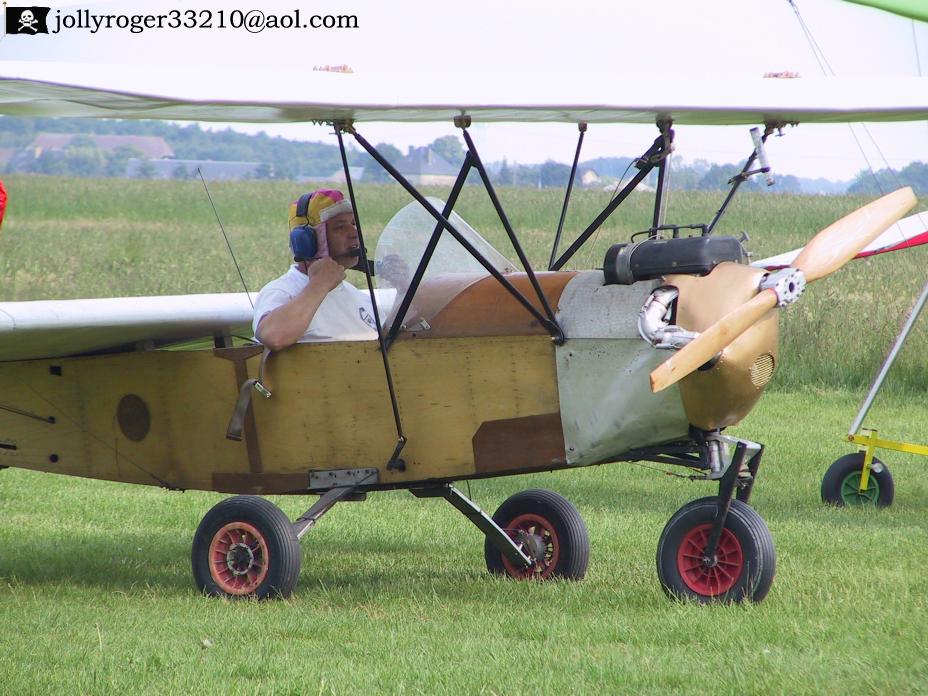
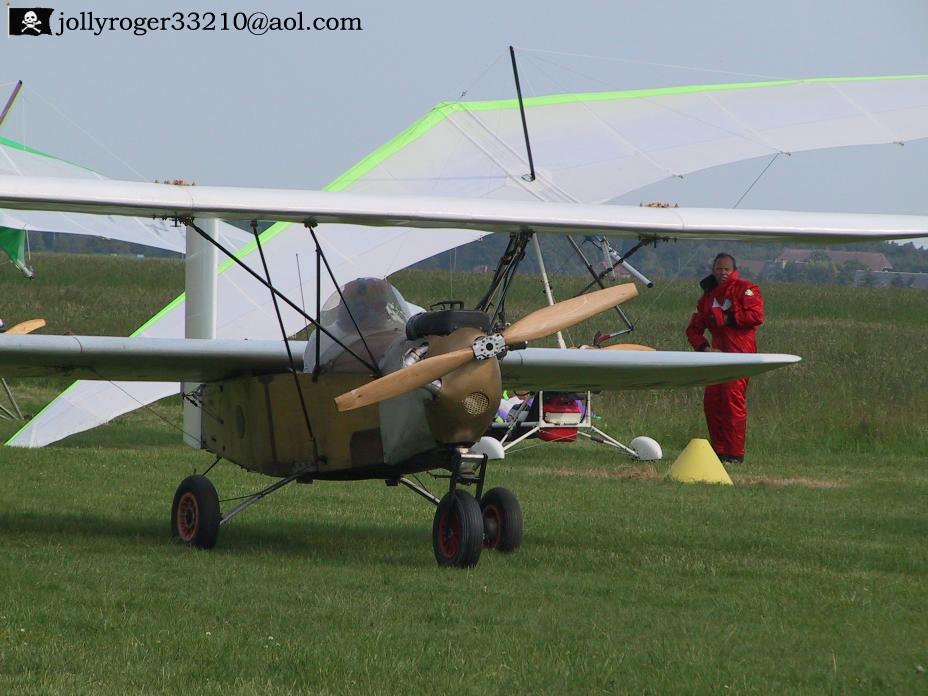

HM14 / canopy added / Bernard Domont
This HM14/360 got a canopy. Bernard Domont made many times special Flying Fleas. This was another one.
At the right side there is a fixed, transparant part. The canopy rotates over that part. At the left side there was a opening under the rotating canopy.
By the way ... do like like his front wheels? Wheels of a wheelbarrow with a thin plastic plate bolted to it.
HM-looks / full metal jacket / ??
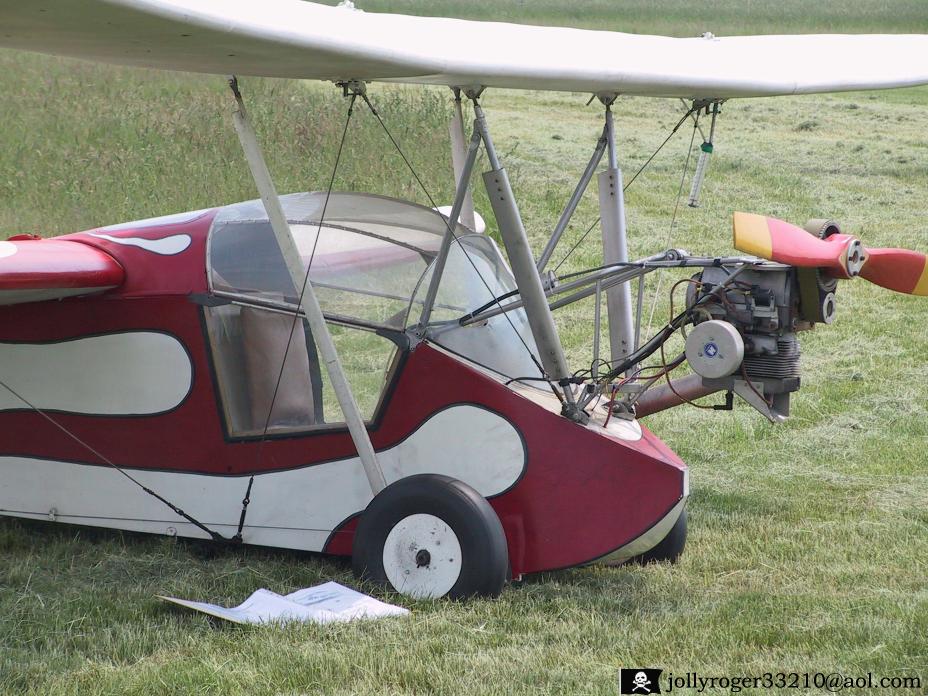
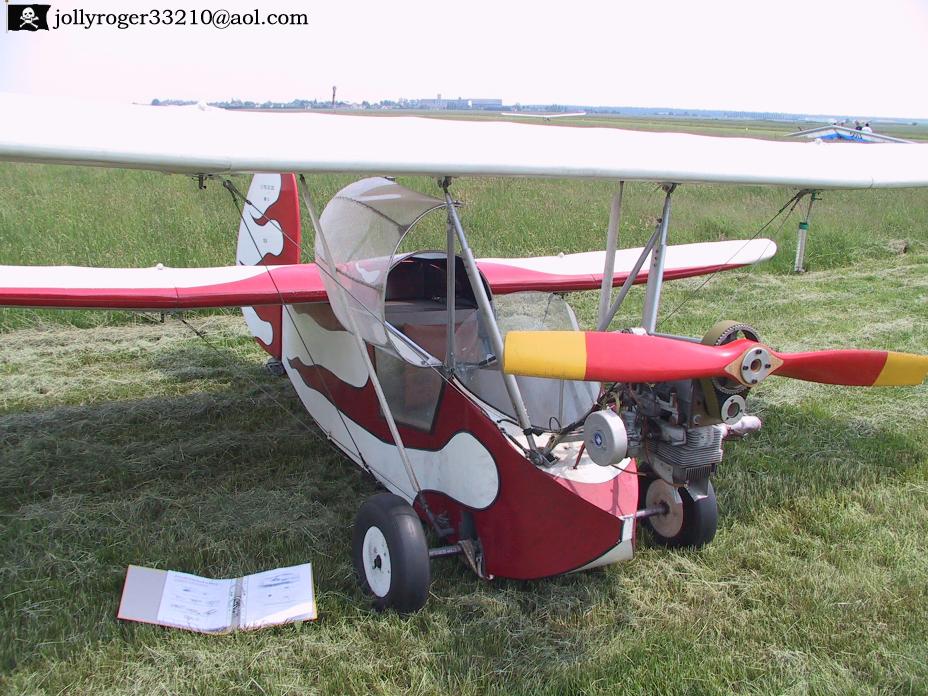
There was not much info about this one. All i recall is that Hans Engels, a engineer that i trust, looked at it and said "he forgot at each side one tube to counter the massive torsion a flying flea fuselage will get. In the last picture you see two known man in the Flying Flea world. Jacques Langlois and Yves Millien.
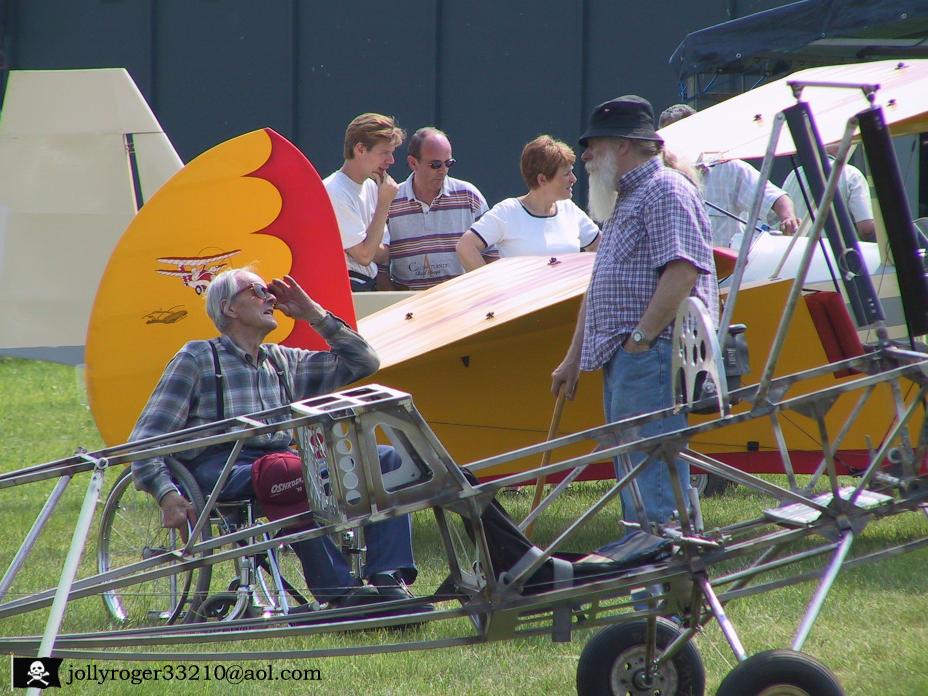
HM293 / canopy fully closed / Jean Watteel
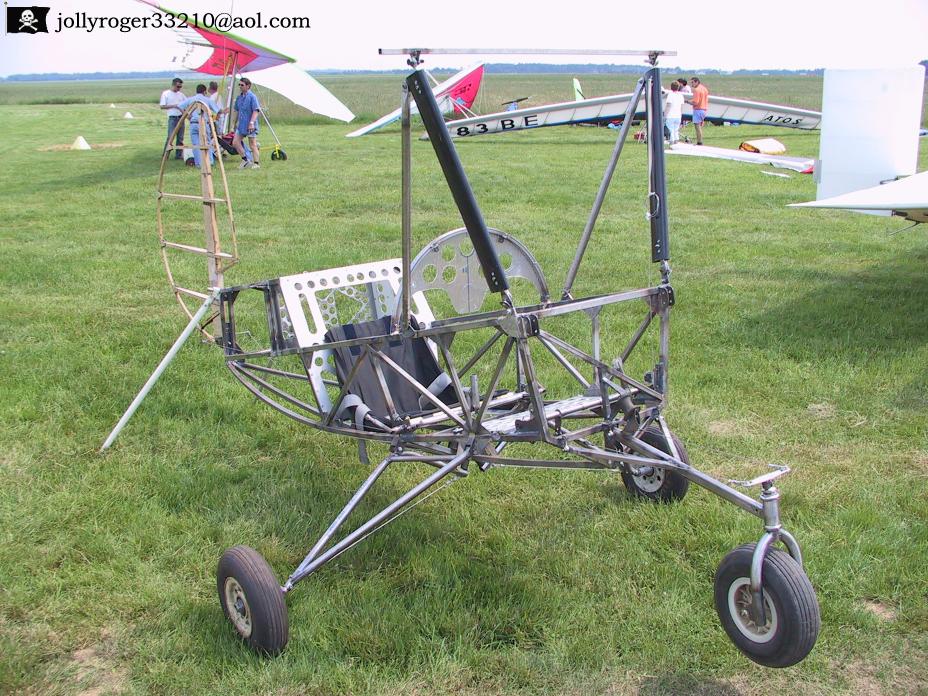
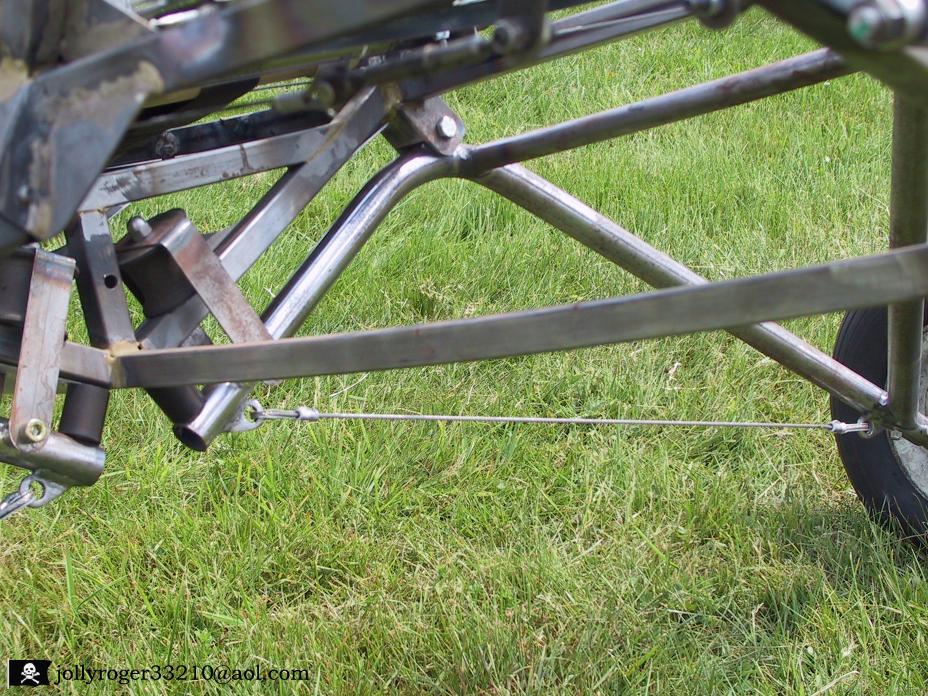
This HM293 is more winterproof than the standard HM293. The hole that is normally there for your elbow is closed here. Nice looking canopy. And good for our colder days too.

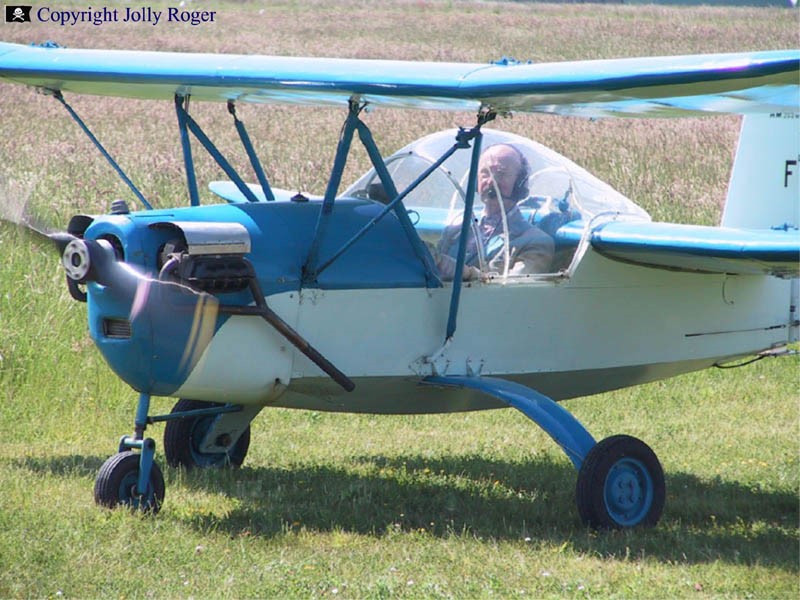
HM293 / slender looking fuselage / Vladislav Lagodin
The builder is a bit heavier (95 kg). So he moved the engine a bit forward to get the CG still good. Hence the long nose. He also made the part behind the pilot a bit different. The fuselage is more slender behind the pilot. He added parts to keep the wing on the needed angle. It all made the fuselage look very slender when compared to other HM293.

Pouchel / fuselage made in profiles
This concept is not now. Michel d' Escatha made several decennia a Flying Flea testbed made from profiles. He wanted to be able to place the parts in different order. Engine at front .. in the middle ...at the rear. I would not be surprised if his work did lead to the Balerit.
But it was Daniel Dalby who started making plans for such a design. He made first a single seater made out of ladders. He later made the fuselage a bit more "enclosed" and even a two seter made from ladders. But he had to change from ladders to profiles. The firm, who made the ladders, were ordering to stop to use them in aviation. Anyway ... the Pouchel didn't die. The editions with profiles are very popular as very easy to make Flying Fleas.
There is one thing you need to know. If you want to buy the plans, you need to become memeber of some club. Don't forget to also become member or you will not get your plans.
the single seater in ladders

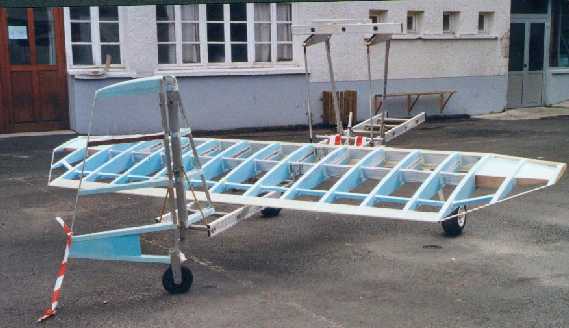

more "enclosed" single seater in ladders
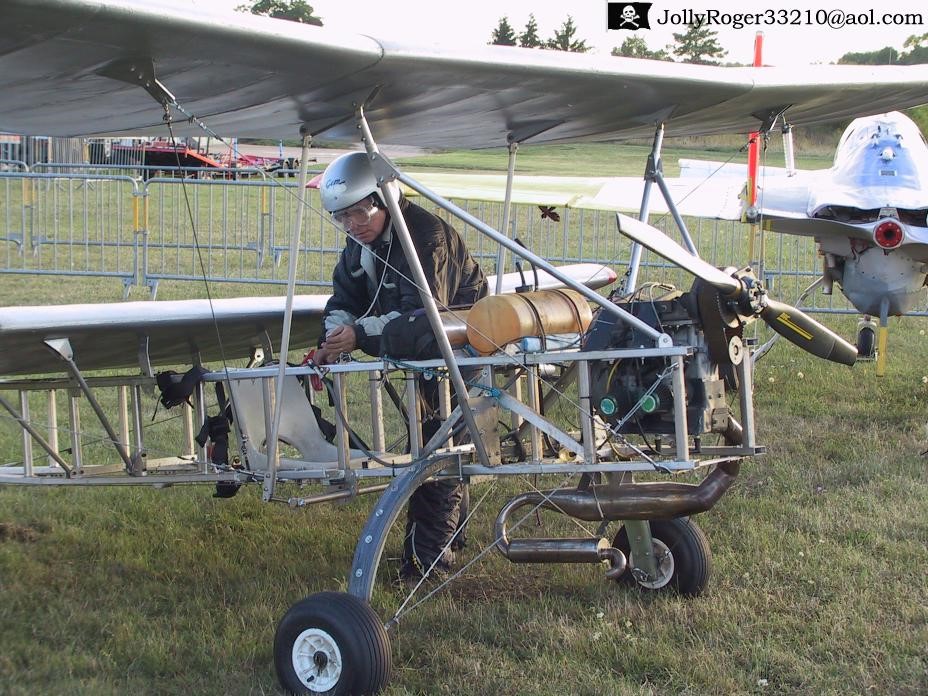
Two-seater in ladders


Single seater in profiles
Two-seater in profiles
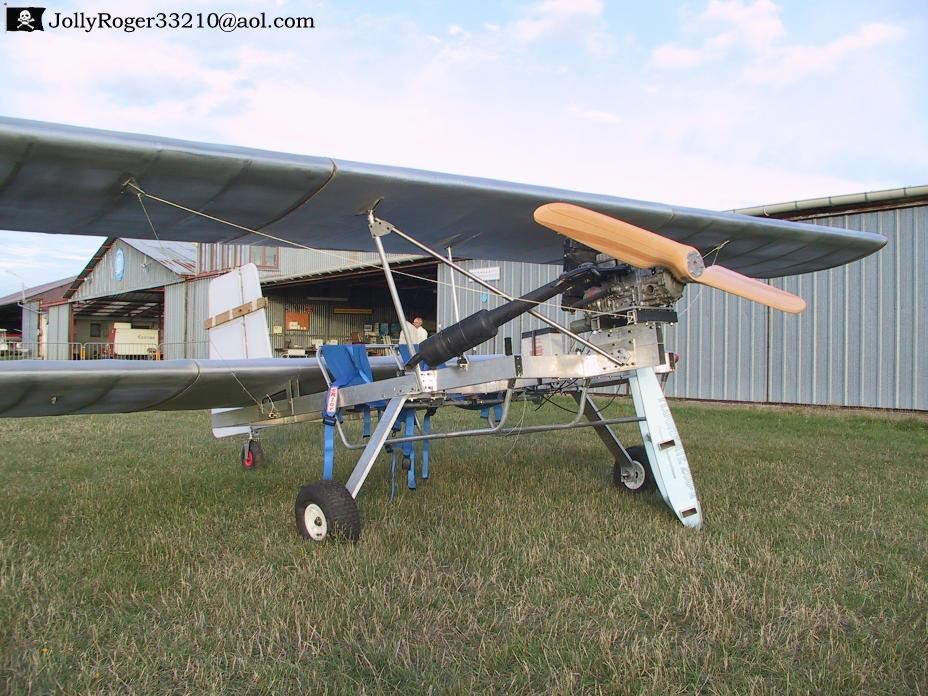
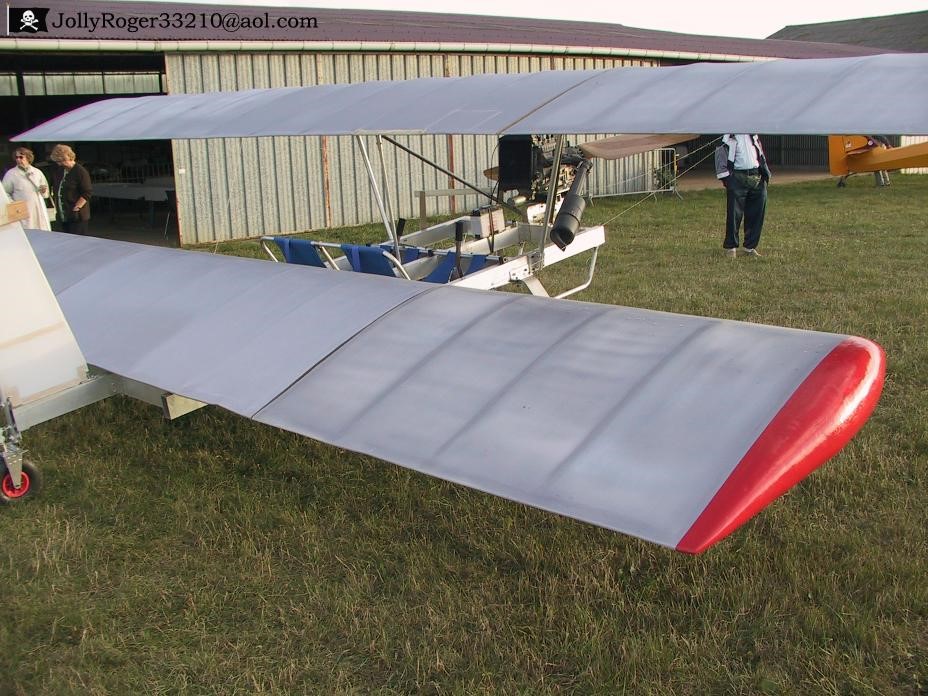
Seaplanes / various builders
I saw this picture of a Balerit on floats. No further info about it.
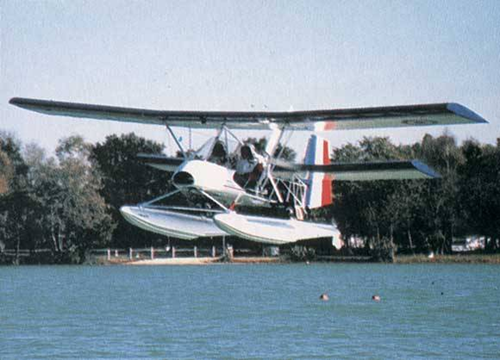
In Tahiti there is a guy building Flying Fleas on floats. Sadly not much info available. Here is his HM293 on floats and a own design of floating hull. It seems he has no need for ponsons to keep the airplane level on his second build.


In Mexico Michel d' Escatha made several designs with a wide hull. MICA was the name of his designs. Not much info available. He promoted it is a flying boat (using wing in groundeffect), but ... they could actually fly. The prop was installed between the wings. Sadly Michel passed away before i could study his design.
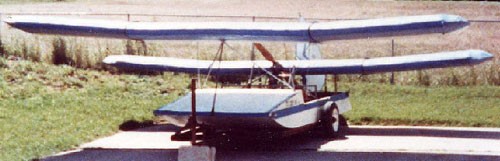
There was a seaplane study by Eut Tileston, which was being studied as a model. So those pictures are a model.
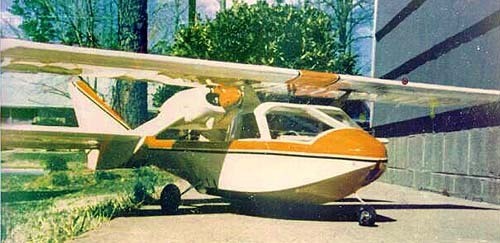


The info i found about this one came from the Homebuildaircraft-forum:
Eut writes.. "Here is a picture of a model of a full sized airplane I designed called the Tern. It is a tandem, both wings the same size. I have the unfinished hull in my garage." He made it in the 70's The scan was from a very faded color print and I did a good deal of restoration. It turns out that the orange trim should be red. Maybe I'll fix it . But maybe not.
Not only is the idea daring, but the model is impressive. I was working on the image for about 15 minutes before I realized I was looking at a model.
He adds..
"The model was built by Jim Hanson of Virginia Beach, VA and was test flown by Herk Stokley. The test went satisfactorily, It was not flown off water, not sure why. This was back in 1972 and my memory is not perfect. I did find some of my files and attach some drawings.
Not only is the idea daring, but the model is impressive. I was working on the image for about 15 minutes before I realized I was looking at a model.
He adds..
"The model was built by Jim Hanson of Virginia Beach, VA and was test flown by Herk Stokley. The test went satisfactorily, It was not flown off water, not sure why. This was back in 1972 and my memory is not perfect. I did find some of my files and attach some drawings.