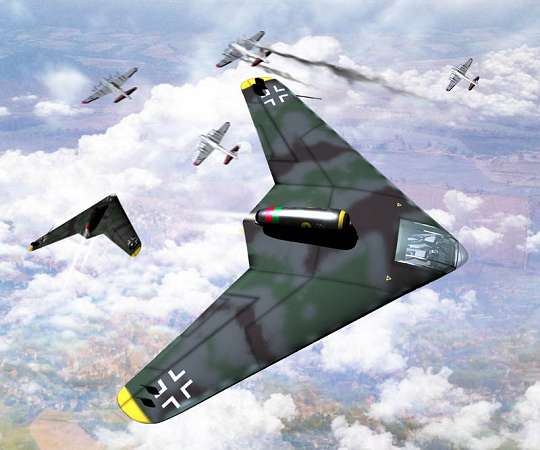
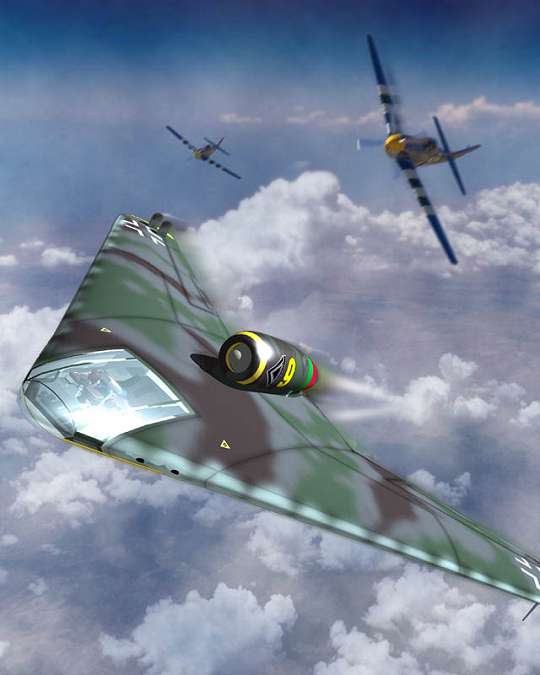
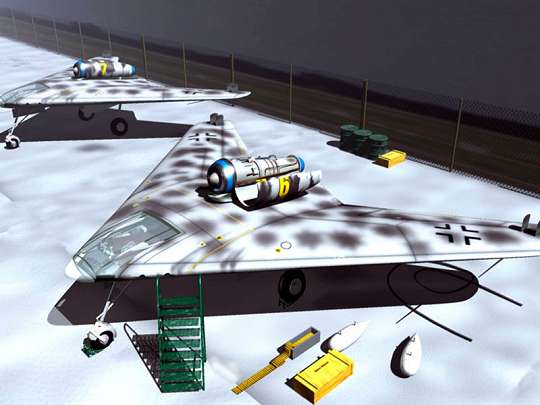
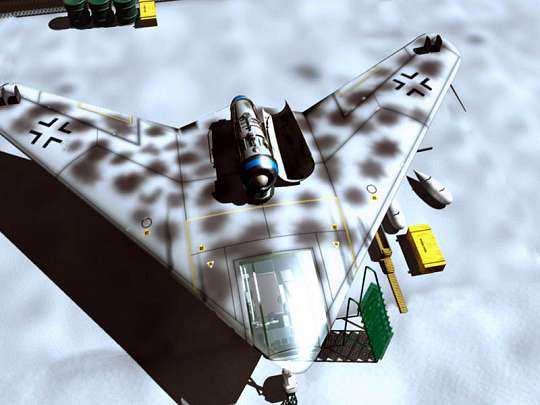
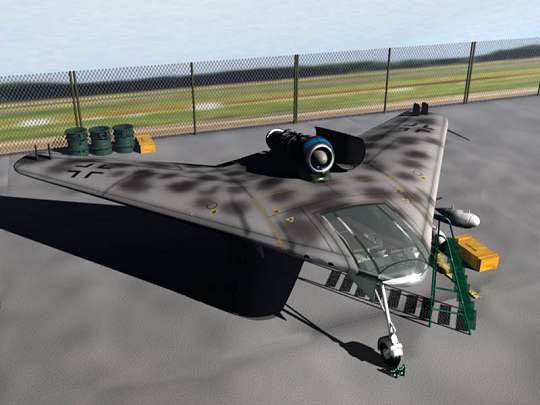
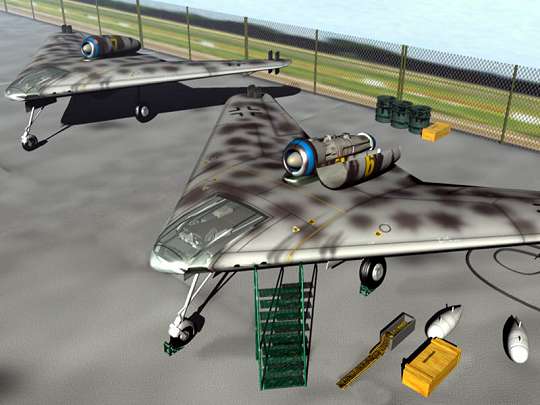
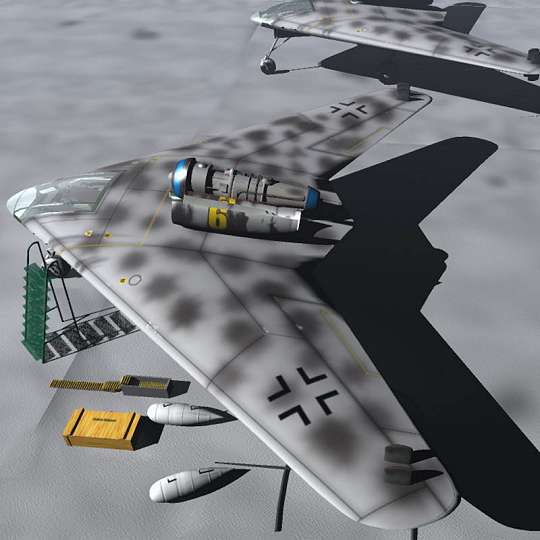
 In August 1944 the Gotha Aircraft Company was given the job of series production of the Horten brothers' Ho IX all-wing fighter, which would be known as the Horten Ho 229. After receiving the plans and design data, Gotha engineers found some areas for improvement. The Ho 229 was limited in space to install new equipment or to add more crew members. More importantly, since the engines were to be enclosed in the wing, different engines could not be fitted without extensive aerodynamic testing, which was not possible time wise considering the worsening war situation for Germany.
The Gotha designers, led by Dr. Ing. Hünerjäger, proposed an alternate all-wing design to the RLM in January 1945 which used many of the construction techniques as the Horten aircraft but had the advantage of being able to be modified with new equipment and engines without changing the flying characteristics greatly. The basic construction was to be a welded steel tube frame covered by plywood and "Formholz", a molded and formed wood sheathing.
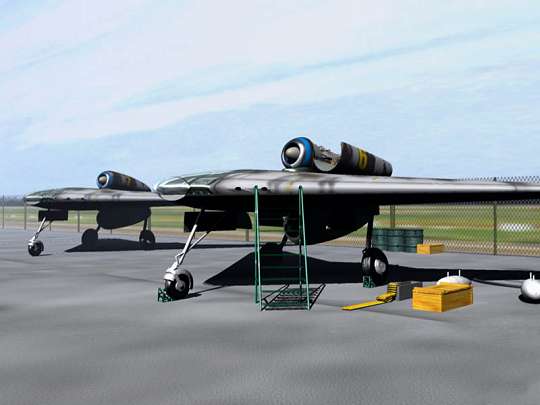
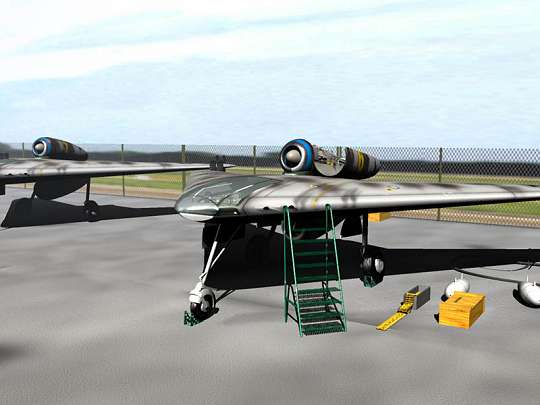
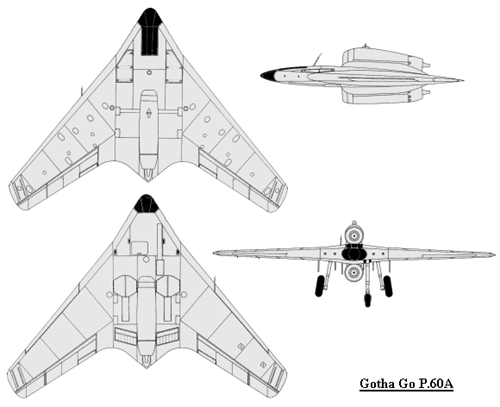
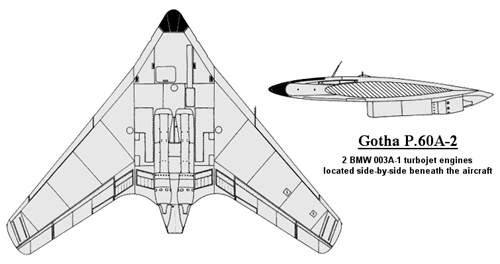
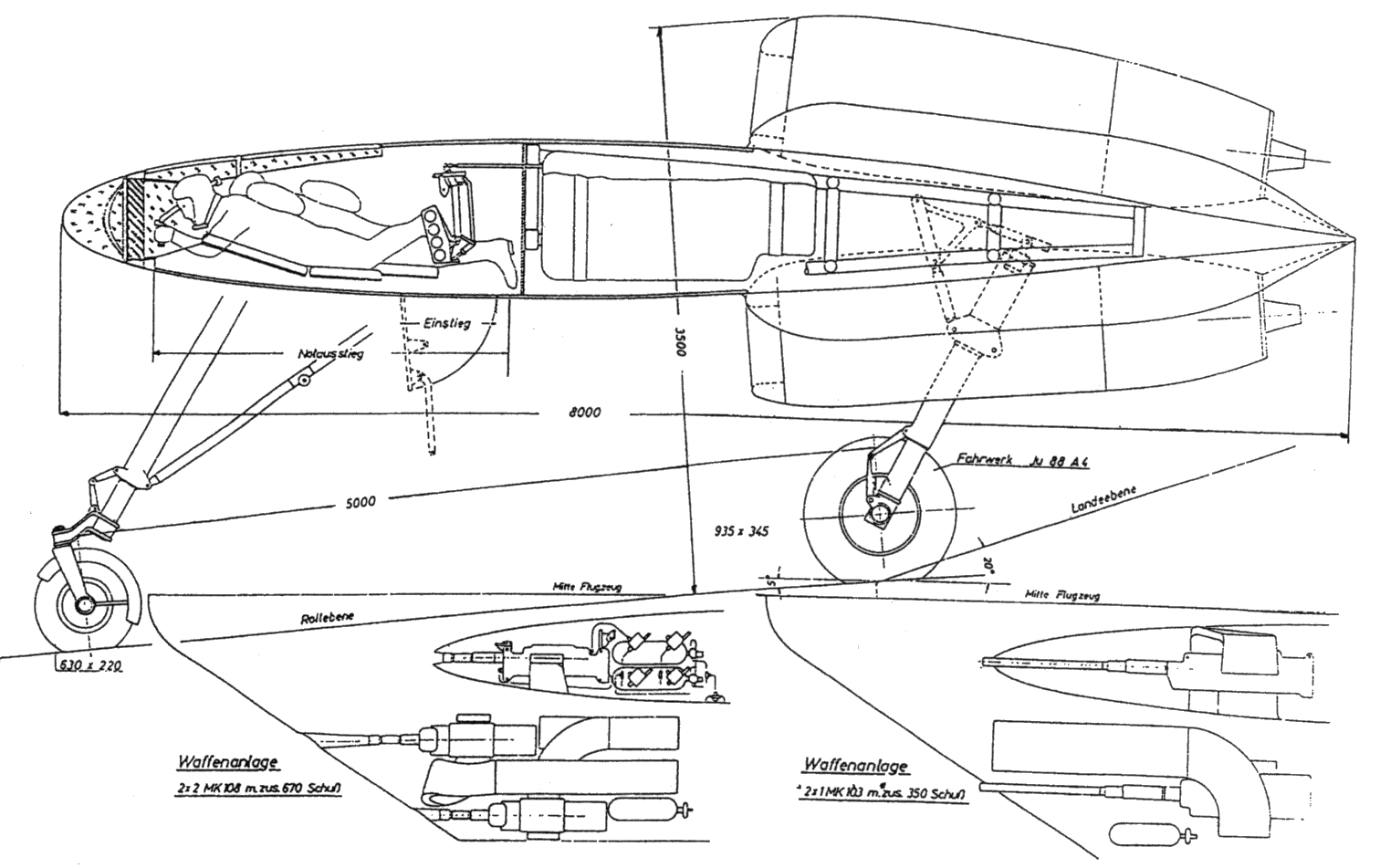
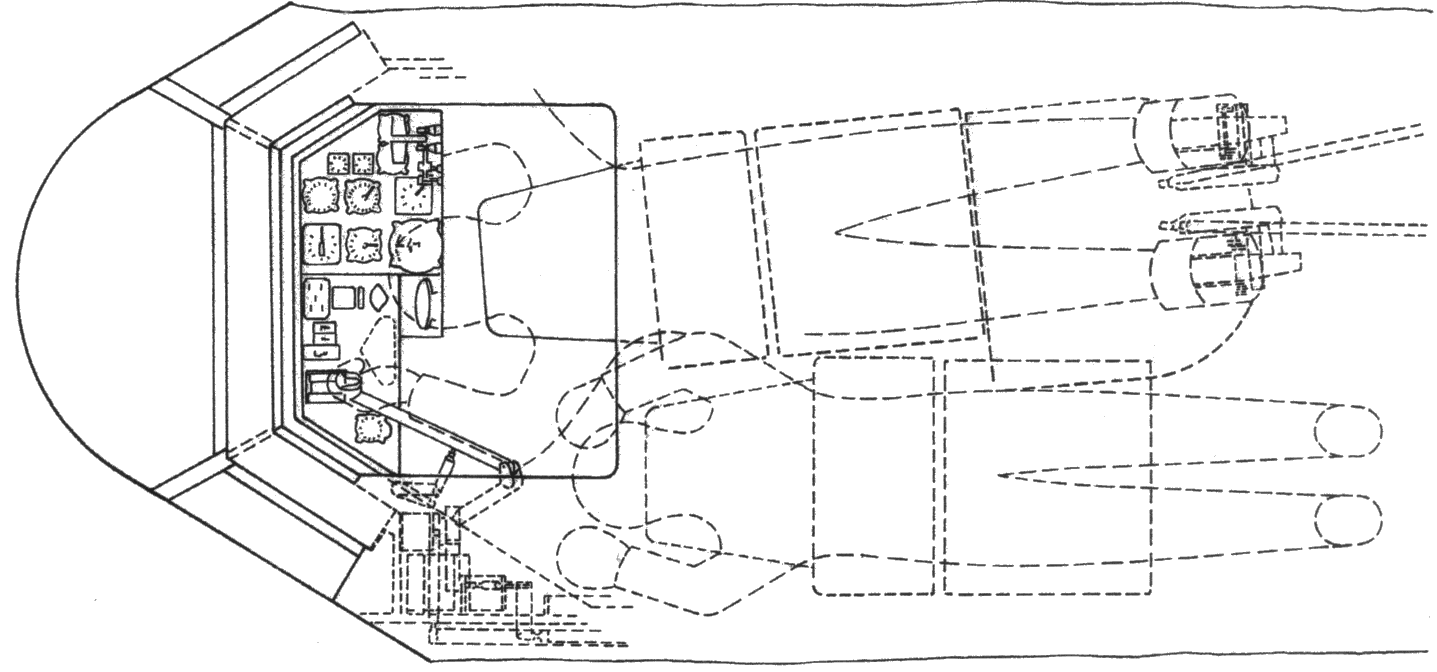
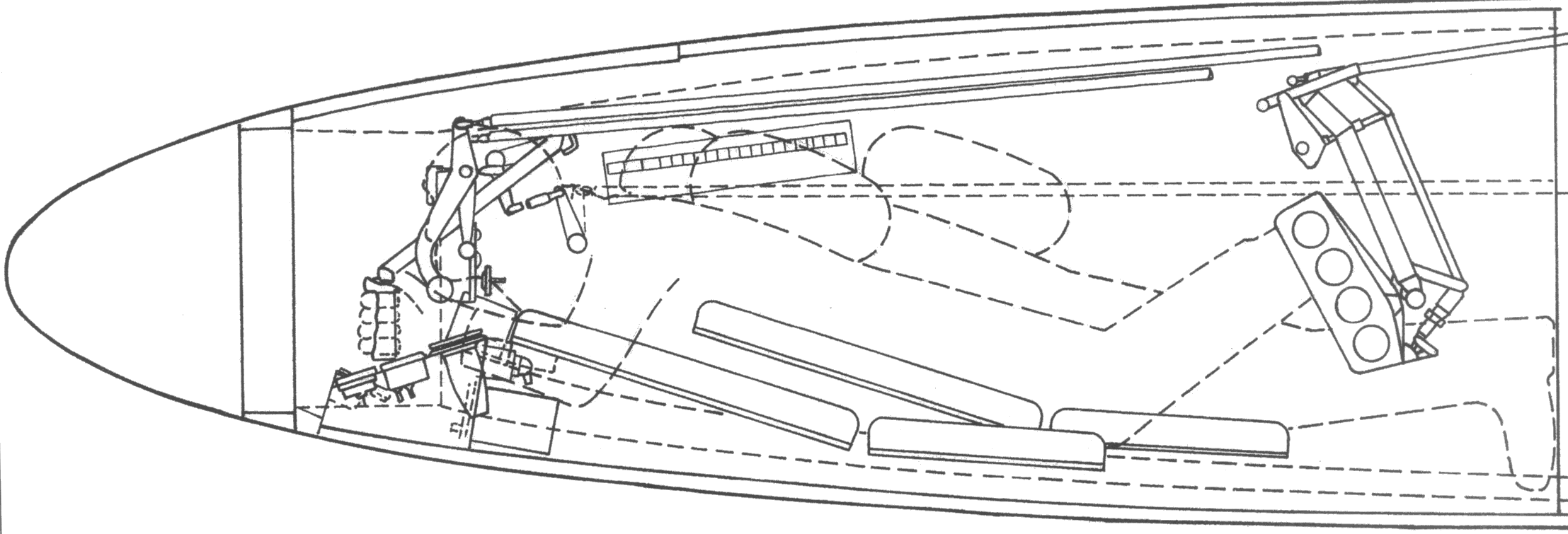
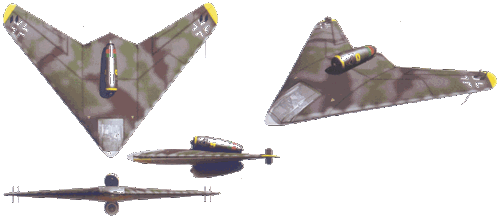
The Gotha Go P.60A was a flying wing that was powered by two turbojet engines near the rear of the wing center section, one above the wing and one below. One advantage to this arrangement was that any jet engine could be fitted, and maintenance would be easier with the engines in the exposed nacelles. However, in the designed Go P.60A, two BMW 003A-1 with 800 kp (1763 lbs) of thrust were to be used at first. Three fuel tanks were enclosed within the wings, one 1200 liter (317 gallon) tank in each outer wing panel and one 1200 liter (317 gallon) tank behind the cockpit. The pressurized and armored cockpit, located in the extreme nose, held two men who were in a prone (lying down) position. The prone position had the advantage of allowing the crew to withstand G-forces better, and was researched in the Berlin B9 test aircraft. This system was also used in the DFS 228 high altitude reconnaissance aircraft and the Henschel Hs 132 jet powered dive bomber. The main landing gear legs retracted to the front and rotated 90 degrees to lay flat. The nose gear was offset to the port side and retracted to the rear.
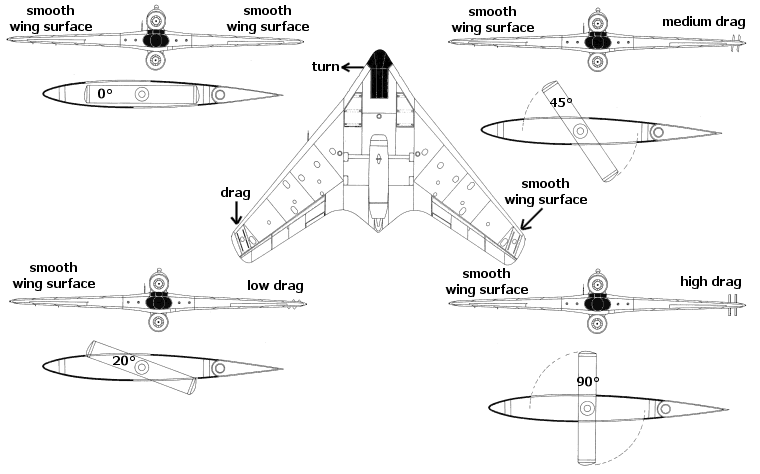
To cure stall during landing, the wing leading edge was fitted with hydraulically activated split flaps. There were also a pair of conventional split flaps mounted at the rear which were installed with a 15 degree forward sweep and also could be used as air brakes. The other three types of control were:
- Elevators/Elevons - located in the inner trailing edge of the wing and were provided with auxiliary trim tabs
- Ailerons - located in the outer trailing edge of the wing and had internally balanced control flaps
- Drag Rudders - located in the wing tips at a 18 degree angle (to the aircraft centerline), they were designed for the pilot to be used during high speed maneuvers
One of the main criticisms of the Go P.60A was the difficulty for the crew to escape while in flight. One solution was to mount both jet engines below the wing, and this proposed version was to be known as the Go P.60A-2 . Unfortunately, this configuration reduced the roll rate in combat and was eliminated. Although further versions were to have some sort of ejection device for the crew, the war's end prevented the completion of the Gotha Go P.60A.
----------------------------------------------------------------------------------------------------
Comparing Ho229 and Go P.60A
Translation of Captured Enemy Document
GEGENÜBERSTELLUNG 8-229 GO P-60 (Comparisons of the 8-229 and the GO P-60 All-Wing Airplanes)
GEGENÜBERSTELLUNG 8-229 GO P-60 (Comparisons of the 8-229 and the GO P-60 All-Wing Airplanes)
----------------------------------------------------------------------------------------------------
Horten IX/Ho229
| Span | Length | Height | Wing Area | Total Area | Max. Weight | Max. Speed | Ceiling | Range |
| 12.2 m 40' 1" |
8.82 m 28' 11" |
3.5 m 11' 6" |
46.8 m² 504 ft² |
110 m² 1184 ft² |
7450 kg 16424 lbs |
915 km/h 569 mph |
12500 m 41000' |
1600 km 994 miles |
----------------------------------------------------------------------------------------------------
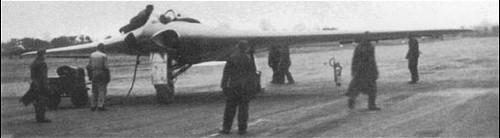
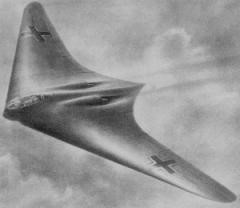
Horten IX/Ho229
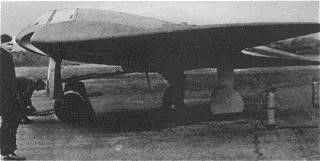
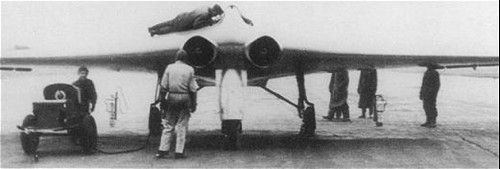
----------------------------------------------------------------------------------------------------
Gotha Go P.60 A
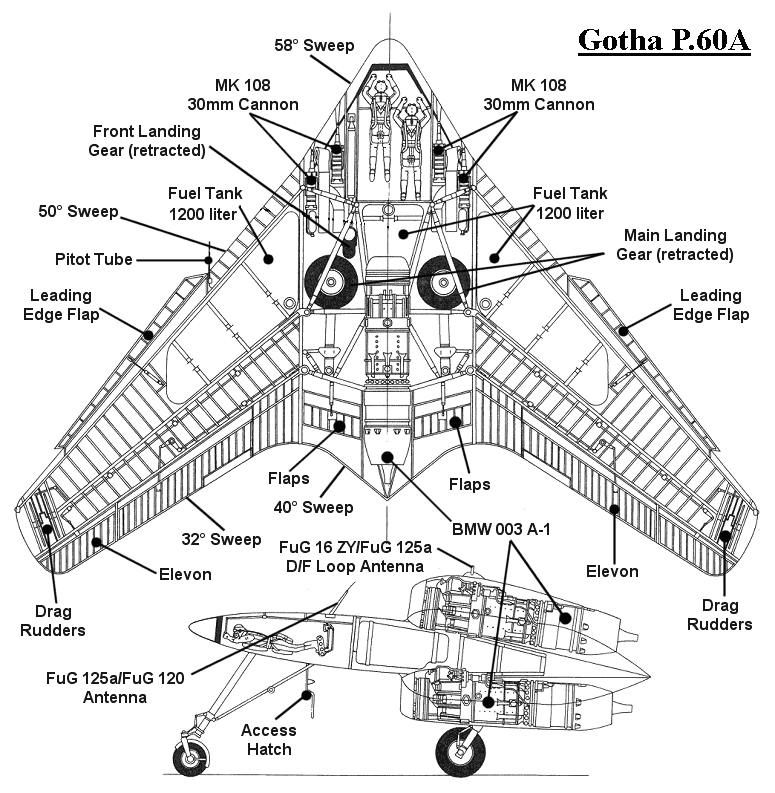
click picture to get better, bigger picture
----------------------------------------------------------------------------------------------------
Gotha Go P.60 A/R all features similar to Gotha P.60 A except as noted.
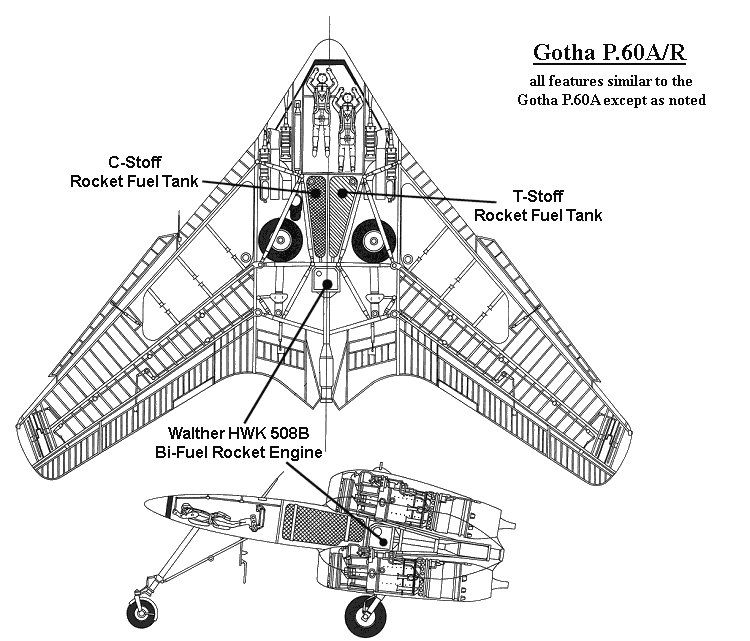
click picture to get better, bigger picture
----------------------------------------------------------------------------------------------------
----------------------------------------------------------------------------------------------------
Gotha Go P.60A Drag Rudder System
Click picture to get better, larger picture
----------------------------------------------------------------------------------------------------
Gotha Go P.60A Details
(click on an image to open a larger view in a new browser window)
(click on an image to open a larger view in a new browser window)
----------------------------------------------------------------------------------------------------
Top 5 drawings: Gotha Bats by Justo Miranda & Paula Mercado
Detail drawings and color 3-view: Gotha P.60 by David Myhra
Detail drawings and color 3-view: Gotha P.60 by David Myhra
Artwork of Gotha Go P.60A by Andreas Otte